Divorce and Infidelity in Malaysia: Why Evidence Matters More Than Emotion
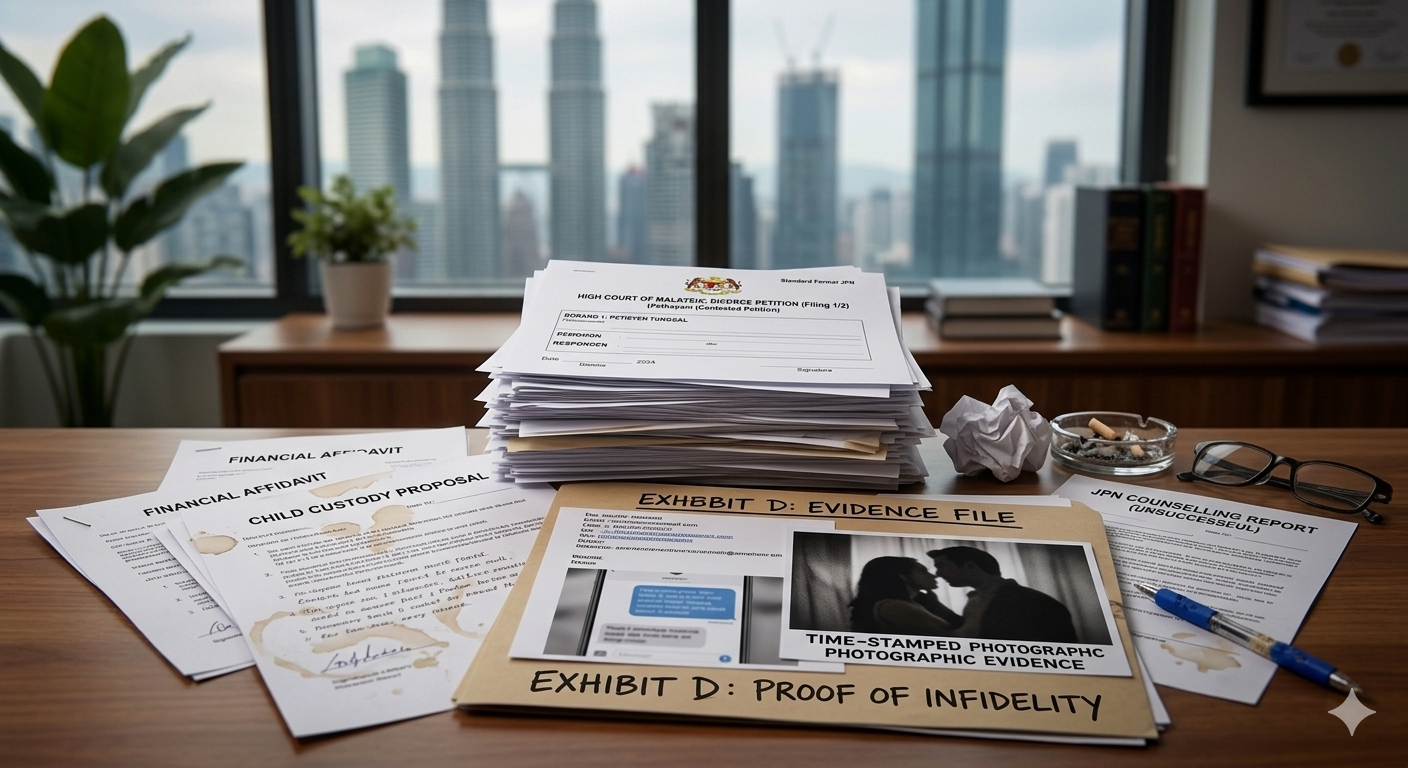
Few experiences are as emotionally devastating as discovering that a spouse may be involved in an affair.
For some, the discovery comes unexpectedly through a message, a phone call or a chance encounter. Others begin noticing changes in behavior, unexplained absences or inconsistencies that gradually raise suspicion. Regardless of how the truth emerges, the emotional impact is often immediate and overwhelming.
Anger, betrayal, confusion and a desire for immediate answers are entirely understandable reactions.
However, from a legal perspective, one of the most important realities is this: many cases involving allegations of infidelity are not weakened by the law itself. They are weakened by the decisions made in the immediate aftermath of the discovery.
In emotionally charged situations, people often act before they think. Unfortunately, those first reactions can sometimes make it more difficult to establish the facts later.
What Does the Court Actually Consider?
Many people believe that adultery can only be proven through direct evidence or by catching a spouse and a third party in an intimate situation.
In reality, civil courts do not operate on that basis.
The Court’s task is to examine the evidence and determine which version of events is more likely than not to be true. The standard of proof is known as the balance of probabilities.
In simple terms, the Court asks whether the evidence, taken as a whole, makes one explanation more probable than the other.
As a result, successful cases often depend not on a single dramatic piece of evidence, but on a collection of facts that point towards a consistent and reasonable conclusion.
Conduct Often Speaks Louder Than Words
In many cases, allegations of infidelity are established through patterns of behavior rather than admissions.
The Court may consider evidence showing frequent overnight stays, repeated private meetings, cohabitation, travel arrangements, witness testimony or other circumstances suggesting a relationship that extends beyond friendship.
A single incident may not be sufficient. However, when multiple pieces of evidence point in the same direction, the overall picture may become compelling.
The Court is generally concerned with patterns, consistency and probability rather than isolated suspicions.
Documentary Evidence Is Often the Most Persuasive
While emotional confrontations frequently dominate personal disputes, courts tend to place greater weight on objective evidence.
Messages, emails, travel records, hotel records, tenancy documents, photographs, financial transactions and other contemporaneous records may all be relevant depending on the circumstances.
Importantly, context matters.
A single screenshot rarely tells the full story. Courts are often more interested in complete conversations, timelines and supporting documentation that can be independently verified.
The stronger the documentary evidence, the less reliance there is on speculation or assumption.
The Most Common Mistake After Discovery
One of the most frequent mistakes occurs immediately after suspicions arise.
Many people instinctively confront their spouse, demand explanations or inform family members and friends before properly understanding the facts.
While such reactions are understandable, they can have unintended consequences.
Electronic evidence may be deleted. Communication patterns may change. Accounts may be closed. Explanations may be rehearsed. Potential witnesses may become reluctant to become involved.
When legal proceedings eventually commence, emotions remain strong, but the available evidence may be significantly weaker than it could have been.
This does not mean individuals should secretly investigate their spouses or engage in unlawful conduct. It simply highlights the importance of acting carefully and obtaining proper advice before making significant decisions.
Timing Can Be Important
Another reality that is often overlooked is the significance of timing.
Some individuals choose to forgive, reconcile or postpone action in the hope that the situation will improve. Every family situation is unique, and many couples successfully rebuild their relationships after periods of difficulty.
However, where legal proceedings are eventually contemplated, delays may affect the availability of evidence and the overall strength of a case.
As time passes, records may disappear, memories may fade and circumstances may change.
For this reason, individuals facing serious marital difficulties should understand their legal position before making long-term decisions.
The Legal Consequences Extend Beyond Damages
Public discussion about infidelity cases often focuses on financial compensation. In practice, however, legal proceedings are rarely only about money.
The existence of credible evidence may influence negotiations relating to divorce, settlement discussions and the overall management of the dispute.
Well-prepared cases often place parties in a stronger position when attempting to resolve matters without prolonged litigation.
Ultimately, the strength of a legal case is rarely determined by emotion. It is determined by evidence.
Protecting Yourself During a Difficult Time
Infidelity allegations are among the most sensitive issues encountered in family law.
Every case is different. Some suspicions prove justified. Others do not. For that reason, assumptions should never replace evidence.
When emotions are at their highest, individuals often feel pressure to act immediately. Yet the most effective legal decisions are usually made after careful consideration rather than emotional reaction.
Understanding your legal rights does not mean pursuing revenge. It means ensuring that important decisions are made with clarity, proper information and an appreciation of the consequences that may follow.
In many situations, the greatest protection a person can give themselves is not anger, confrontation or public accusations.
It is patience, evidence and informed legal advice.
Because when a dispute eventually reaches the courtroom, the Court will not decide the case based on who was angrier, louder or more hurt.
The Court will decide it based on what can be proven.
This article is general information about Malaysian law and is not legal advice. Every matter turns on its own facts — please speak to us about your situation.